Come for the question. Leave seeing something differently.
The conditions organisations and leaders are navigating right now are genuinely complex. The speed is real. The boundaries between disciplines, functions and consequences are multiplying. AI is moving faster than most organisations can orient to. And the questions this raises, about human contribution, organisational capability, what we are not adequately seeing and what becomes possible if we could, are live in almost every room.
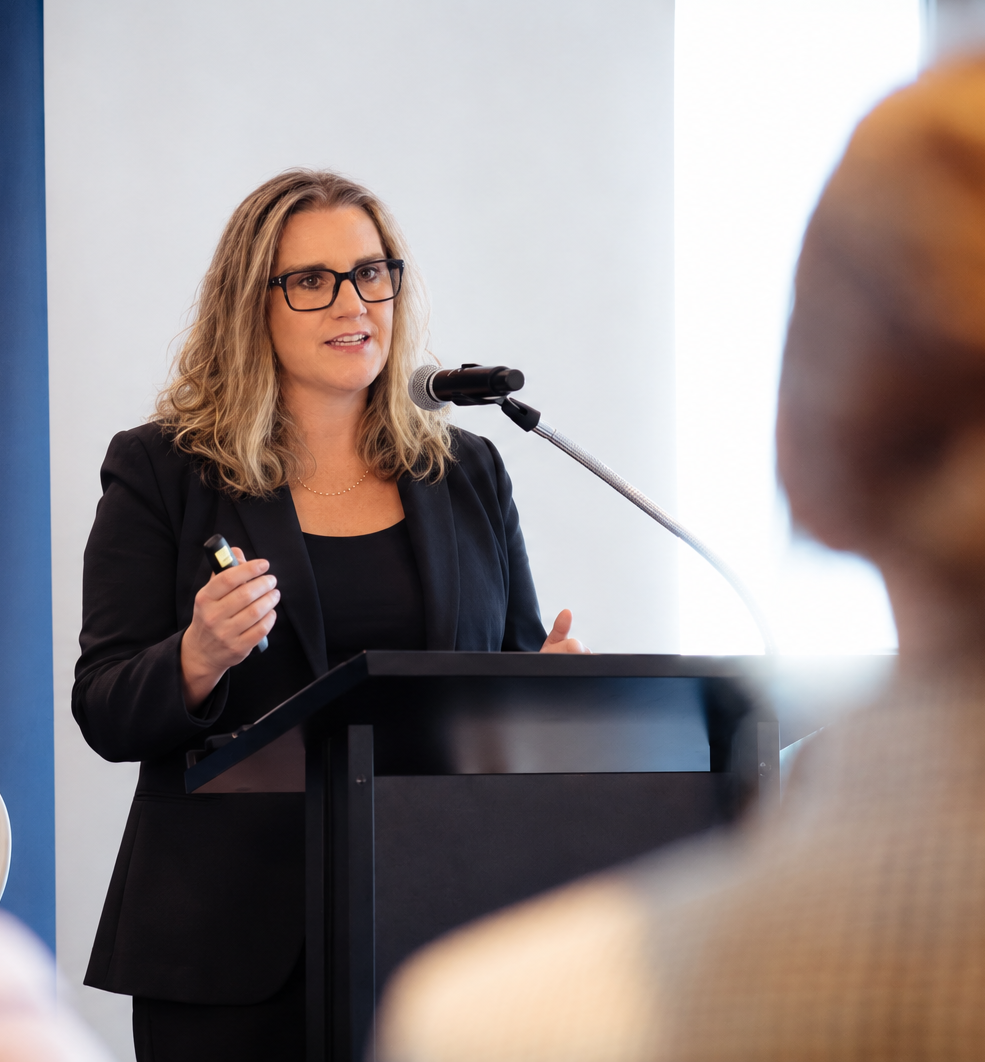
The talks that land in this moment change what the room is capable of seeing.
They give an audience a better question, a wider frame, or a relationship between things that had previously been held apart.
Claire Allison speaks about humans, organisations, complexity and increasingly capable machines, and what becomes visible when ideas usually held separately are brought into relation.
What becomes consequential about human contribution as intelligent machines become increasingly capable?
How can an organisation contain extraordinary knowledge and still struggle to see the problem it is inside?
What information disappears when we rush to resolve uncertainty before we have understood what it contains?
Claire’s talks begin with questions like these and follow them somewhere useful.
Claire takes an audience from the representation they arrived with to one capable of holding more of the question.
The aim is a room still thinking after the talk has ended.
Questions worth putting into a room.
Claire’s speaking work is organised around a developing set of inquiry territories rather than a catalogue of fixed keynote products.
The question creates the doorway.
Where the inquiry travels depends on what becomes visible from there.

THE IRREDUCIBLE HUMAN
What becomes consequential about human contribution as intelligent machines become increasingly capable?
AI is becoming capable of performing more activities previously used as evidence of distinctly human value.
Writing. Analysis. Synthesis. Pattern recognition. Creation. Reasoning.
This changes the questions we need to ask about human capability.
What are we actually measuring when we talk about human capability?
What happens to our representation of human value when increasingly capable systems can reproduce more of its visible outputs?
What aspects of consequential human contribution become visible when replication stops being the test?
What remains irreducible when everything that can be replicated has been replicated?
This is Claire’s flagship inquiry into AI, human contribution and the assumptions underneath the future-of-work conversation.
Relevant to organisations and audiences navigating AI, leadership, innovation, creativity and changing representations of human value.
THE VISIBILITY PROBLEM
How can an organisation know so much and still fail to see the problem it’s inside?
Complex organisations can contain enormous expertise.
The information relevant to a consequential problem may exist across technical teams, commercial functions, leadership, delivery partners, regulators and people closest to the work.
Each may hold a coherent representation.
The difficulty can emerge in the relationships between them.
Often, the knowledge already exists.
What is known may never become sufficiently connected to change what the organisation can see.
This inquiry explores representation, distributed knowledge, specialist boundaries and the conditions that determine what becomes visible at organisational level.
Particularly relevant to leadership, major projects, multidisciplinary organisations and work where consequences travel across conventional boundaries.
THE CUMULATIVE LOAD
What if some conversations about human performance begin too late?
Organisations separate demands into categories so they can be measured, managed and assigned.
The human experiences the cumulative field.
This inquiry asks what becomes visible when we examine the total conditions surrounding human performance.
What is the total load the humans inside your organisation are actually carrying, and who is responsible for assessing it?
What becomes sustainable, rather than merely survivable, when that load is made visible?
What does the cumulative impact methodology, applied to people rather than landscapes, make possible to see?
Relevant to leadership teams, HR and people functions, major project environments, and organisations where high performance is being drawn from humans operating at sustained capacity.
HOLD THE AND
What consequential information disappears when we rush to choose?
Complex work regularly presents us with explanations that appear to compete.
We are trained to resolve the tension.
Sometimes the tension contains information.
Hold the AND long enough to discover what a premature OR would destroy.
Holding the AND creates enough room to investigate the tension before resolving it.
What does each representation explain?
What does each leave unexplained?
What becomes visible when their relationship is investigated?
This inquiry explores uncertainty, competing representations, judgement and the discipline of keeping consequential questions open long enough to learn from them.
Relevant to large multidisciplinary teams, complex project environments, siloed or fragmented organisations, and leadership groups seeking greater collaborative capacity and perspective across competing representations.

Claire brings 25 years inside consequential complex systems and major-project delivery, including 15 years in renewables and energy transition, across environmental, technical, regulatory, commercial, strategic, organisational and human boundaries.
She follows consequence across boundaries.
The questions cross boundaries because the consequences do.
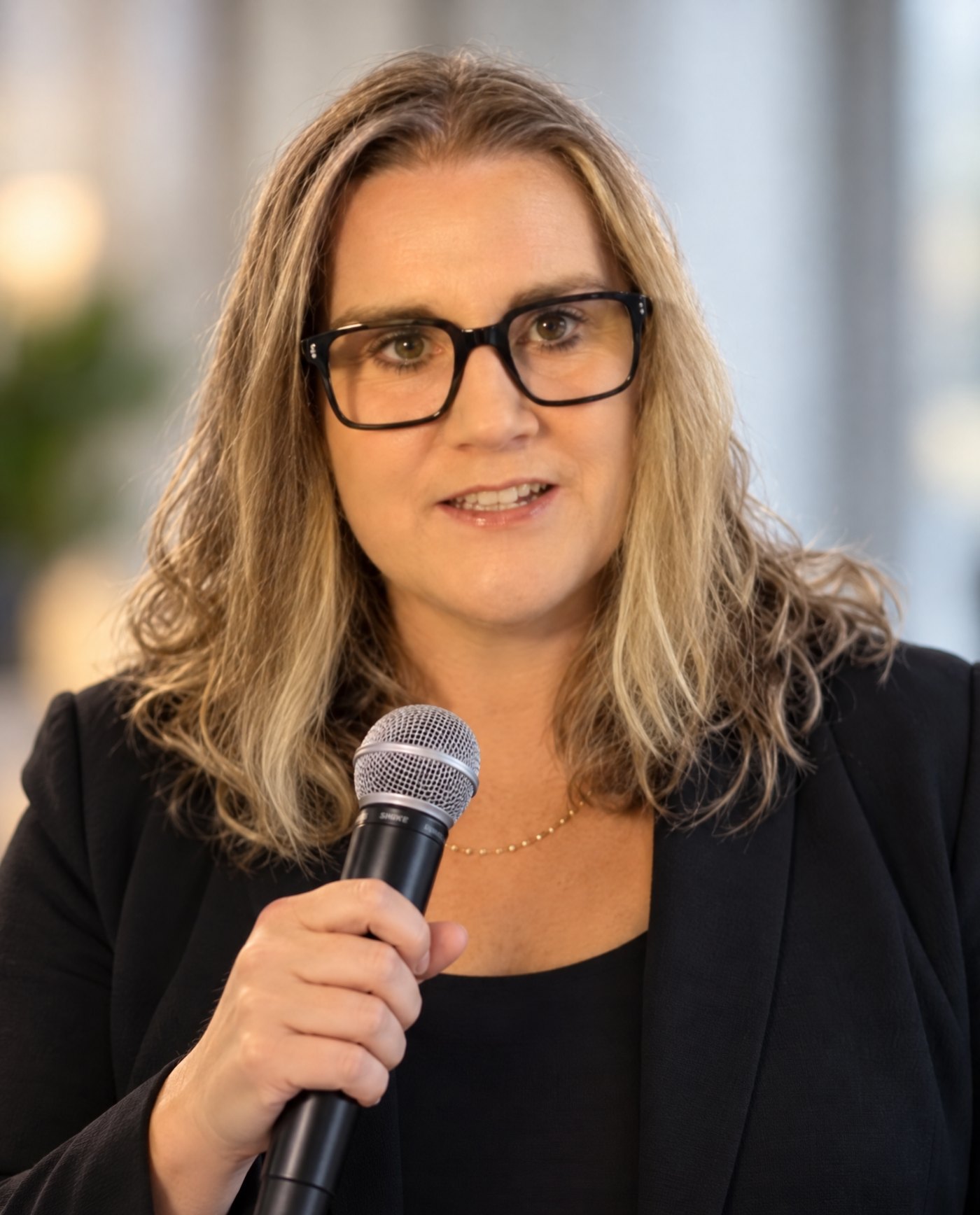
Something recognisable enters the room.
A question that doesn’t resolve easily.
An assumption that becomes visible.
Ideas usually held separately coming into contact.
The original question shifting into something with more in it than when it arrived.
The objective is to change what becomes available for an audience to notice.
The talk ends. The inquiry travels with them.

- Keynotes
- Conference and professional-body sessions
- Executive and leadership conversations
- Panels and facilitated conversations
Selected talks can be adapted where there is a genuine connection to the room and its work.
The question comes first.
What question is your room ready for?
Tell us who is in the room, what they are navigating, what doesn’t reconcile, and what you want them thinking about after the session.
We’ll start with the question.