The conditions under which humans and leaders are operating have fundamentally shifted.
The volume of incoming has increased beyond what any system of attention was built to hold. More channels. More speed. More simultaneous consequential things moving at once. A Teams message, an email, a decision bouncing back by end of day, a project that was stable yesterday and isn’t this morning.
Information has become effectively free and infinite. Which means the burden of filtering has moved almost entirely onto the human doing the work. More access. More noise. The signal is still there. Finding it now requires more than it used to.
And the speed. Decisions that used to turn around in days or weeks now move in hours. Sometimes minutes. The complexity of what’s being decided hasn’t reduced. The time available to decide has. Consequential judgments are being made at a pace that requires more of judgment, not less.
And the systems themselves are becoming more complex. More interdependent. More consequential in terms of what a judgment or decision can set in motion. The boundaries between disciplines, organisations, teams and stakeholders are not simplifying. They are multiplying. What used to be a contained problem increasingly turns out to have implications that travel further than the frame used to look at it. The pressure this produces is not occasional. It is structural, and it is building.
And then there is AI.
Moving faster than most organisations can orient to. The gap between what is becoming possible and what is actually being used inside most organisations is already significant and widening.
Most people are still encountering it primarily as a productivity tool, something that makes existing tasks faster. The possibility of redesigning how work gets done, and what human capacity might be unlocked in the process, is still largely unrealised. Many are still discovering what it can actually do.
And the risk is not only in underusing it.
A machine can produce an excellent answer to a question whose assumptions nobody thought to examine.
And underneath the uncertainty sits something harder to name.
Pressure to be using it more. A sense that others may be further ahead. Questions about roles, contribution and value that are present in almost every room, rarely named directly, and almost never adequately worked through.
What remains irreducibly human is not a philosophical question anymore.
It is a live organisational one.
You may be feeling all of this as overwhelm. Fragmentation. Scattered across too many things, unable to settle into any of them long enough to think clearly. No room to breathe. Constant and ever building pressure.
Or it may be quieter. A low-grade awareness that the picture you’re working from is no longer quite adequate to the reality producing the pressure. Something isn’t reconciling. More information isn’t making the answer clearer.
This is not a personal failure of capacity or focus.
These are structural conditions.
They are increasing.
And within that same complexity, things are opening. Conditions are shifting. Possibility is present, even when the picture isn’t yet adequate to see it.
Now bring this into your own sphere. The conditions are not abstract. They are producing something specific in your work, your organisation, your leadership, right now.
You may already know what it is.
Or you may only have a sense that the current picture is no longer enough.
ONE BODY OF WORK.
MULTIPLE WAYS IN.
The inquiry travels across several territories.
The expressions are different. The underlying way of seeing, thinking and working is shared.
THE IRREDUCIBLE
HUMAN
What remains irreducibly human as the conditions around us change, and what becomes possible when we can see, develop and use that contribution more deliberately?
What people see, know, sense, decide and contribute that isn't adequately represented by their role.
How people and organisations make sense of situations where multiple systems, pressures and consequences interact.
What happens when increasingly capable AI enters the systems through which humans think, decide and work.
What do we augment? What must remain human?
What happens to human capacity, perception and contribution under pressure, and what helps people remain available to themselves and others.
How leaders and teams think, decide, learn and act when conditions exceed the formal model they are working from.
How the picture we use shapes what we can see, and what becomes possible when that picture becomes more adequate.
WAYS INTO THE WORK
- EXPERIENCE
- Diagnostic · Speaking · Webinars / Public Inquiry
- FACILITATE
- Offsites & Retreats
- WORK WITH
- Professionals · TIHI Live Lab
- INQUIRE
- Research · Publishing · Institute
TIHI works with organisations, leaders and professionals at exactly these thresholds, where complexity is increasing, pressure is accumulating, and possibility is present but not yet visible.
The work is finding what belongs in relationship. What the situation already contains that hasn’t yet been seen. What becomes available when the picture becomes adequate to the reality producing it.
Here is what that looks like in practice.
The opportunity was already in the room.
A business leader. A single casual conversation.
They were navigating a transition they had not yet fully named.
Claire got curious. Asked questions. Listened.
As she listened, she began tracing the upstream connections: what this person already had, what was changing in the conditions around them, and what relationship between the two might be consequential enough to follow.
She followed the thread.
Built out what she could see.
And sent it through, because the possibility was real enough to warrant pursuing.
The response made clear that something had landed.
It was not what they had been expecting.
But it named something they needed.
And once they could see it, they wanted to move on it.
The capability was already present.
The conditions were already changing.
The opportunity was already there.
What changed was that the relationship between them became visible.
That is the work.

The Irreducible Human Institute
Something consequential is happening.
Something isn’t adding up.
Something is becoming possible.
More things keep turning out to matter.
And somewhere in the middle of it, you are responsible for what happens next.
The Irreducible Human Institute works with people, businesses and organisations when getting further across what is happening could materially change what becomes possible.

Where does this meet you right now?
Something may be under pressure.
Something may be opening.
Or something may need to move, but what deserves movement isn’t clear yet.
Something needs attention.
The same issue keeps returning.
More information isn’t making the answer clearer.
A decision touches more of the business than expected.
The obvious solution fixes one thing and creates another.
Different people can each explain what is happening from where they stand.
Something that used to work no longer seems enough for the reality you’re dealing with now.
Something doesn’t reconcile.
Something is opening.
Capacity has become available.
Conditions have changed.
A capability you already possess may have value somewhere new.
Several things that previously seemed unrelated are beginning to connect.
You can see the edge of an opportunity, direction or next move without yet seeing around it.
The question may not even be fully formed.
Something is becoming possible.
And something still has to happen next.
A decision needs to be made.
An opportunity needs to be investigated.
A situation needs to move.
A direction needs to be chosen.
You do not need to know everything.
You need enough of what matters available to decide what deserves movement.
Sometimes the value starts with noticing what has become possible.
A specialist engineering business was creating capacity at the top.
As operational responsibility began moving away from the CEO, another question became available:
What could this capacity make possible?
A conversation surfaced a relationship between specialist capability the business already possessed and an emerging infrastructure market it had not been actively pursuing.
That relationship was then investigated across market demand, technical context, regulation, major players, procurement pathways and positioning.
What began as an observation became a substantially developed opportunity the business could deliberately investigate.
This is what getting further across what’s happening can make available.
The capability already existed.
The market already existed.
The changing capacity of the CEO was real.
The value came from bringing those things into relationship, recognising that the relationship might be consequential, and following it far enough to become useful.
Where TIHI works
TIHI can enter at different scales and kinds of work. The underlying function stays the same: helping people see more of what is happening, understand what belongs together, and act from a more complete picture.

Businesses & Organisations
Sometimes, everyone involved knows what they’re doing.
And still, something doesn’t reconcile.
For leadership teams, organisations and complex environments where multiple pressures, systems, people and strategic questions need to be seen together.
When something consequential in the work needs a better picture.
You might be carrying a strategic decision, emerging opportunity, recurring problem, transition or piece of work that has become harder to think about as more things turn out to matter.
Sometimes enough of the situation can become available through one person who is close to it.
Sometimes consequential parts of the reality live in different places.
Engineering knows something.
Commercial knows something.
Operations knows something.
Leadership knows something.
The people closest to the work know something.
Everyone can know their piece. Nobody may yet hold enough of the problem.
The expertise may already be there.
The information may already exist.
The people may be capable.
The systems may be functioning as designed.
And still, something doesn’t reconcile.
Sometimes you need a different distance from the problem.
The people closest to a situation often know things an outsider could not.
They also have work to deliver, decisions to make, histories and assumptions built through experience, and immediate consequences competing for their attention.
Being in the weeds gives you access to the weeds.
It can make the shape of the field harder to see.
TIHI brings a different proximity.
Close enough to understand the reality.
Far enough away to notice relationships, assumptions and possibilities that can become difficult to see from inside it.
The value comes from bringing these different ways of seeing into relationship.
TIHI combines independent strategic inquiry with targeted research and relevant specialist bodies of knowledge, drawing on established work in systems, cognition, organisational boundaries and decision-making where it helps us get further across the situation.
And when something requires expertise beyond the inquiry, that matters too.
Getting adequately across a situation includes recognising what other expertise needs to enter it.
You don’t need to diagnose the intervention.
Bring what’s happening.

Professionals
For experienced professionals, founders and leaders who keep finding themselves doing work their role doesn’t quite explain, and whose contribution is larger than the language usually available to describe it.
Do you recognise yourself in this kind of work?
You keep finding yourself involved in things your role doesn’t quite explain.
You find yourself drawn into work that crosses functions, disciplines and conventional boundaries.
You notice relationships other people miss.
You can see the larger landscape and what is actually happening on the ground.
You understand how two apparently conflicting perspectives can each contain something important.
You connect things that arrived separately.
You help other people see what they are actually dealing with.
And yet when it comes to explaining your own value, the language gets strangely thin.
Your role captures part of it.
Your CV captures the things you’ve done.
Your performance measures capture what can be counted.
Some of the contribution people rely on you for most may be the contribution your professional world recognises least.
That can affect more than how you feel about your work.
It can affect recognition.
Authority.
Opportunity.
Remuneration.
Career direction.
The work you are trusted with.
The level at which your contribution gets used.
You may know there is something valuable here and still struggle to make it legible without reducing it to something smaller than it is.
TIHI Professional explores what changes when you can recognise your contribution more adequately, articulate its value in language other people can understand, and become deliberate about where, how and at what level you use it.
Your contribution may be bigger than the representation available for it.
Speaking & Facilitation
For organisations, leadership groups and communities wanting TIHI thinking brought into a room through keynotes, facilitated conversations, workshops or other live formats.
You have one room. Make the attention count.
You can fill a program with accomplished people.
The harder job is finding someone who is genuinely relevant to this audience, substantial enough to respect their intelligence, and able to give them something worth continuing to think and talk about.
Your audience has heard the leadership talks.
They have heard the future-of-work talks.
They have certainly heard the AI talks.
Their attention deserves more than another polished version of something they already know.
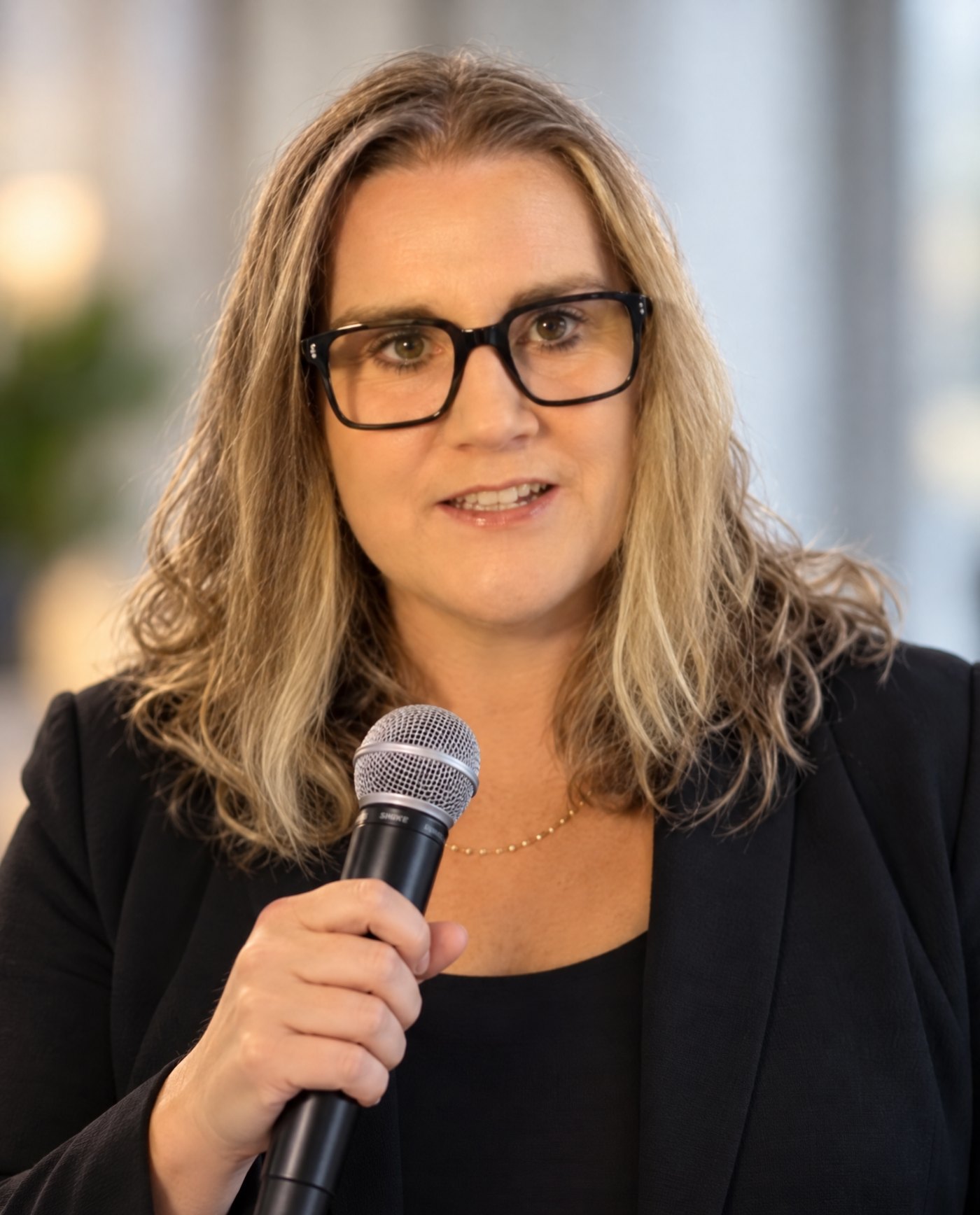
Claire Allison speaks across human capability, leadership, complexity, work and AI, connecting ideas that are often discussed separately and bringing them into contact with the realities people are actually navigating.
For conferences, leadership events, executive rooms and organisations looking for a speaker who can meet a sophisticated audience with substance, curiosity and a genuinely consequential question.
TIHI gets further across what’s happening.
The first explanation is useful.
It may not be enough.
A business problem can turn out to depend on capability, capacity or timing.
A project issue can travel across technical, commercial, organisational and human boundaries.
A strategic opportunity can depend on relationships that were invisible when each part was considered separately.
TIHI starts with what is happening and follows what materially changes the picture.
That can mean bringing separate information into relationship. Looking beyond the presenting problem. Investigating what is missing. Following consequences across boundaries. Testing assumptions. Drawing on relevant knowledge, research and perspectives beyond the original frame.
We go wide enough to understand what matters.
Then we bring it back.
What do we see now?
What materially changes the picture?
What does this open?
What deserves movement?
TIHI gets across enough complexity to make useful simplicity possible.

Compression without destruction.
The picture we use changes what we can see.
We reduce reality so we can think.
We have to.
A project plan cannot contain the entire project.
A role description cannot contain the whole contribution of the person doing the work.
A dashboard cannot contain everything happening across an organisation.
A strategy cannot contain every possible future.
These are representations. They make reality easier to think about, communicate and act on.
Their usefulness depends on what they preserve.
As situations become more complex, more relationships, dependencies, perspectives and consequences can become relevant.
A picture that was perfectly adequate before can stop holding enough of what matters now.
That is often where TIHI enters.
What are we not adequately seeing, and what would become possible if we could?
What this looks like in practice
When multiple pressures converge
A major infrastructure project was approaching a consequential threshold.
Approvals, constructability, financial pressure and program timing were all becoming consequential at once.
Each could be understood legitimately from within its own discipline.
The project trajectory was being produced through their relationships.
Getting further across the situation required looking beyond any single technical, commercial or delivery representation and examining what the converging conditions meant for the project as a whole.
The result was a more usable picture of where consequence was accumulating, what was connected, and what required attention.
When disparate pieces begin to form a trajectory
A professional arrived with a collection of things that mattered but did not yet form a useful whole.
Her work, emerging business direction, health and embodiment practices, future retreat ambitions, visibility, relationships, capability-building and immediate commercial decisions were all present.
Considered separately, each suggested a different priority.
The inquiry brought them into relationship.
What began to emerge was a trajectory: some things were not competing priorities at all. They belonged at different points in a sequence. Activities that looked peripheral became capability-building for what came later. Immediate business development could be understood in relationship with a longer-term direction rather than as a distraction from it.
The result was a more coherent picture of what phase she was actually in, what needed attention now, what needed protecting, and what did not yet need to be forced.
The pieces did not need to become the same thing. They needed to become available in relationship.
Same morphology. Different scale.
A consequential major project and a professional’s converging work and life are materially different situations. The same way of working travels across both: get adequately across what is happening, so the relationships that matter become available before deciding what deserves movement.
The human affects the system.
The system conditions what becomes available through the human.
Neither is adequately understood in isolation.
How TIHI works
TIHI does not begin with a predetermined answer or assume the presenting frame is the right one.
The work moves through four disciplines.
Get beyond the first available explanation.
Stay with the situation long enough for relevant relationships, perspectives, assumptions, conditions and missing information to become available.
Determine what materially changes the picture.
More information is not automatically more useful.
Some information changes very little.
Other information changes what the situation means, what needs attention, who needs to be involved, or what becomes possible next.
Consequence determines relevance.
Protect what still matters.
As the picture becomes clearer, distinguish what can be safely left out from what cannot be removed without materially distorting what we are dealing with.
This is what allows complexity to return to something useful without flattening the reality that made the inquiry necessary in the first place.
Change what becomes possible next.
A more adequate picture should affect movement.
That may mean making a decision. Investigating further. Testing something. Bringing particular people into contact. Pursuing an opportunity. Protecting something important. Stopping something. Or recognising that the responsible move is not to decide yet.
Sometimes the immediate movement is small.
What matters is what it changes in the trajectory.
An intervention changes conditions.
Those conditions affect what becomes available next.
What happens next gives us new information.
TIHI constructs representations too.
The real system gets a vote.

Inquiry · Consequence · Irreducibility
Compression without destruction.

Grounded in more than one way of seeing.
The questions TIHI works with have been studied from many directions.
Its approach draws on and works in relationship with established research and practice across systems thinking, sensemaking, boundary-spanning work, cognitive complexity, interdisciplinary integration, organisational learning and decision-making in complex environments.
These bodies of work offer different ways of understanding how knowledge becomes distributed, how boundaries affect what becomes available, how people make sense of incomplete and sometimes conflicting information, and what happens when consequential relationships cross the categories through which work is organised.
TIHI brings these perspectives into relationship with practical experience across business, major projects, human development and emerging technology.
Research can also become part of a specific inquiry, allowing an initial observation or relationship to be investigated beyond what is already known by the people involved.
No single framework is assumed to contain enough of the reality in front of us.

The Irreducible Human Institute
The Institute
The inquiry behind TIHI began long before there was language for it.
It began in noticing relationships.
How an action here changes what becomes possible somewhere else.
How consequences travel beyond the boundary of what is immediately visible.
How responsibility can extend further than the piece of reality we have been given to hold.
Those observations continued across very different experiences of humans, work, organisations, projects, leadership, systems and the ways we make sense of reality.
Much later, one question brought something that had been travelling for a long time into explicit focus:
What is irreducible about the human?
The question opened the inquiry further.
It travelled into technology and AI.
Into professional contribution.
Into organisations and complex projects.
Into leadership, decision-making and responsibility.
Into the representations humans construct of ourselves, one another and the systems we participate in shaping.
The Institute exists to give that inquiry somewhere to keep travelling.
Its continuing question is:
What are we not adequately seeing, and what would become possible if we could?
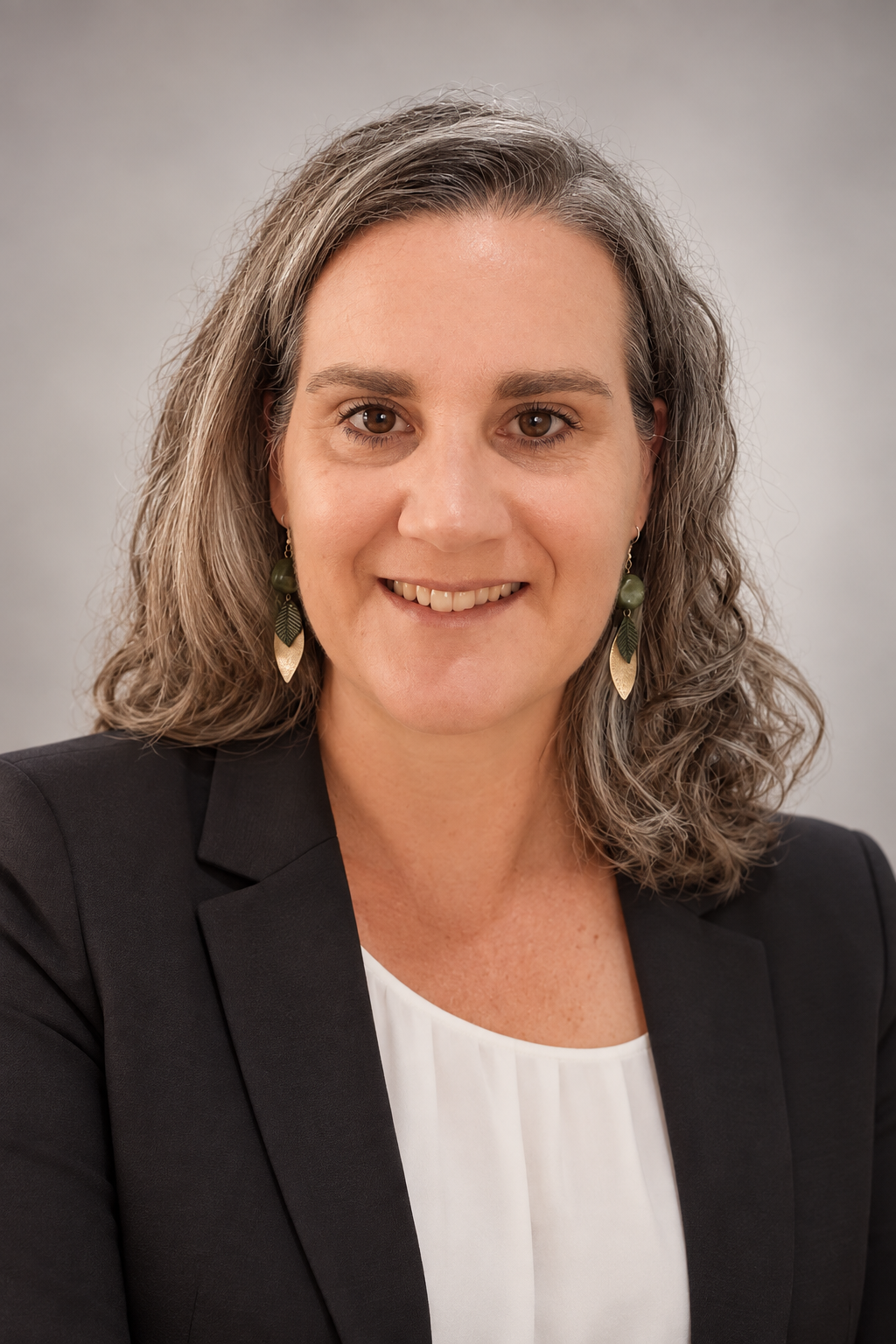

Claire Allison
The person behind the inquiry matters.
Claire Allison has spent 25 years inside consequential complex work: environmental engineering, major projects, organisational leadership, 15 years in renewables and the energy transition, moving across the boundaries that most disciplines stop at. Following consequence. Making relationships visible that couldn’t be seen from inside any single frame.
That way of seeing preceded any framework for it. It was simply how she moved through problems. What took longer was finding a container adequate enough to hold the full depth and breadth of what the inquiry was becoming.
The Irreducible Human Institute is that container. It emerged from a sustained period of AI-augmented inquiry that brought together threads Claire had been carrying across decades: systems, human behaviour, consequence, responsibility, representation, leadership and increasingly capable AI, and made them explicit enough to build from.
The vision behind TIHI is straightforward and not small: that the humans and organisations shaping consequential work can see more of what they are actually dealing with, and that what becomes possible when they can is materially different from what was possible before.
That inquiry is just beginning.
Something brought you here.
Maybe it is pressure.
Maybe it is possibility.
Maybe you know exactly what the problem is.
Maybe you have a question you cannot quite form yet.
You do not need to decide which part of TIHI it belongs to before you make contact.
Tell me what’s happening.
THE IRREDUCIBLE HUMAN INSTITUTE
Inquiry.
Consequence.
Irreducibility.