BUSINESSES & ORGANISATIONS
Something brought you to this page.
Maybe something isn’t reconciling. The effort is real. The capability is present. And still, the situation isn’t moving the way it should.
Maybe something is opening. Conditions are shifting. You can see the edge of an opportunity, a direction, a next move, without yet being able to see around it.
Maybe nothing is acutely wrong. But you can feel that what got you here won’t be adequate for what’s coming. The conditions are changing and the picture you’re working from needs to change with them.
Whatever brought you here, the question underneath it is probably the same.
What are we not adequately seeing, and what would become possible if we could?


The problem with consequential complexity is that it rarely announces itself clearly.
A decision gets made. It is reasonable from within the representation available at the time. Months later, something that looked peripheral turns out to have been materially consequential.
People are working hard. Progress doesn’t match effort. Something isn’t translating, but the gap is easier to feel than to name.
Different parts of the organisation hold different parts of the picture. Each piece is accurate. No single piece contains enough of what matters.
Or the problem is simpler and harder at the same time. Something isn’t congruent. Something has stalled. The current frame isn’t holding enough of the reality you’re actually in.
The presenting problem is rarely the whole problem.
And the frame being used to look at the situation is often part of what needs examining.
INFORMATIONSomething doesn’t reconcile.
Good.
That’s information.
COMPLEXITY ISN’T THE SURPRISE.
The challenge is often the gap between the complexity of the work and the way the work is represented.
Functions, disciplines, reporting lines, approvals, models and accountabilities make work manageable. Consequential problems can travel through all of them.
Where is the work more connected than the way it is currently represented?

POSSESSION IS NOT AVAILABILITY.
An organisation can contain extraordinary knowledge, experience and capability without all of it becoming available to the work that needs it.
TO THE WORK
HUMAN CONTRIBUTIONWhat becomes available from capable people here, in this work, under these conditions, inside this system?
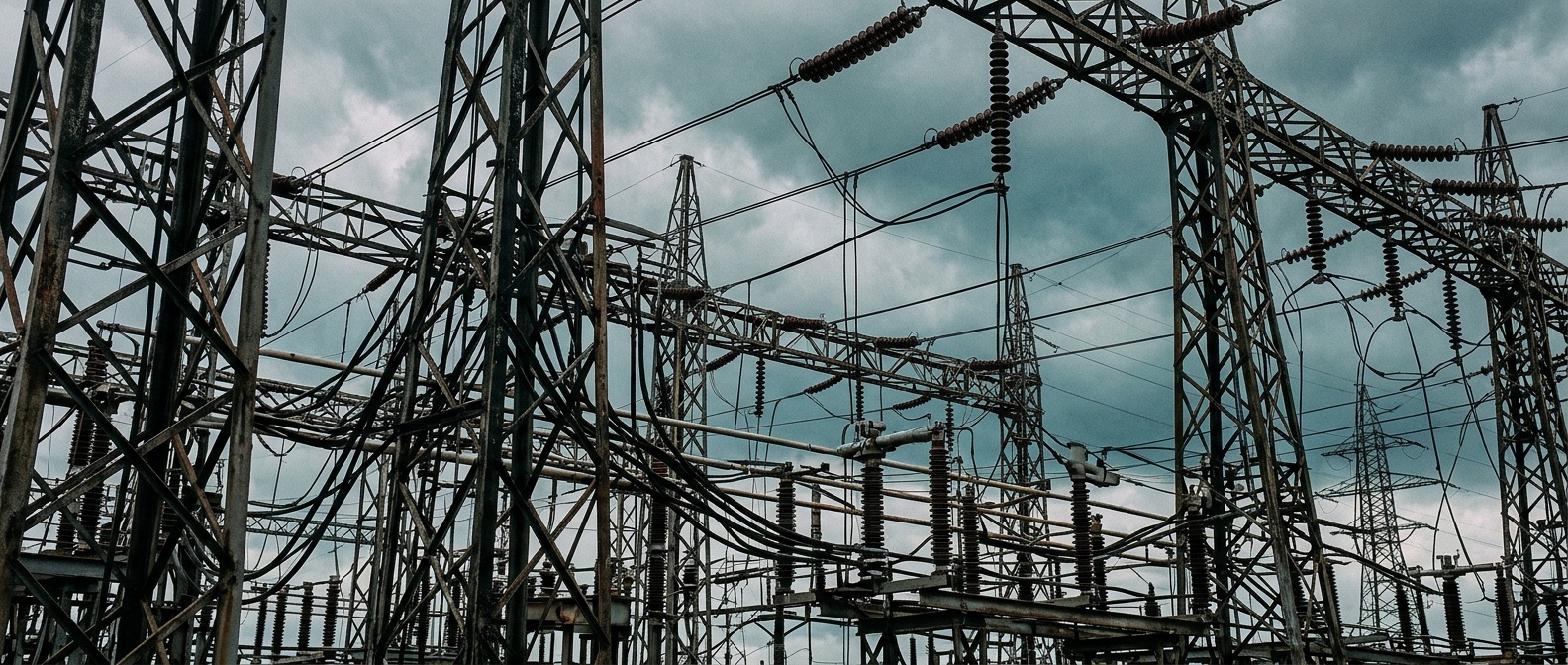
THE PROBLEM MAY NOT LIVE WHERE IT APPEARS.
TIHI begins with the consequence and follows what becomes materially relevant to understanding it.
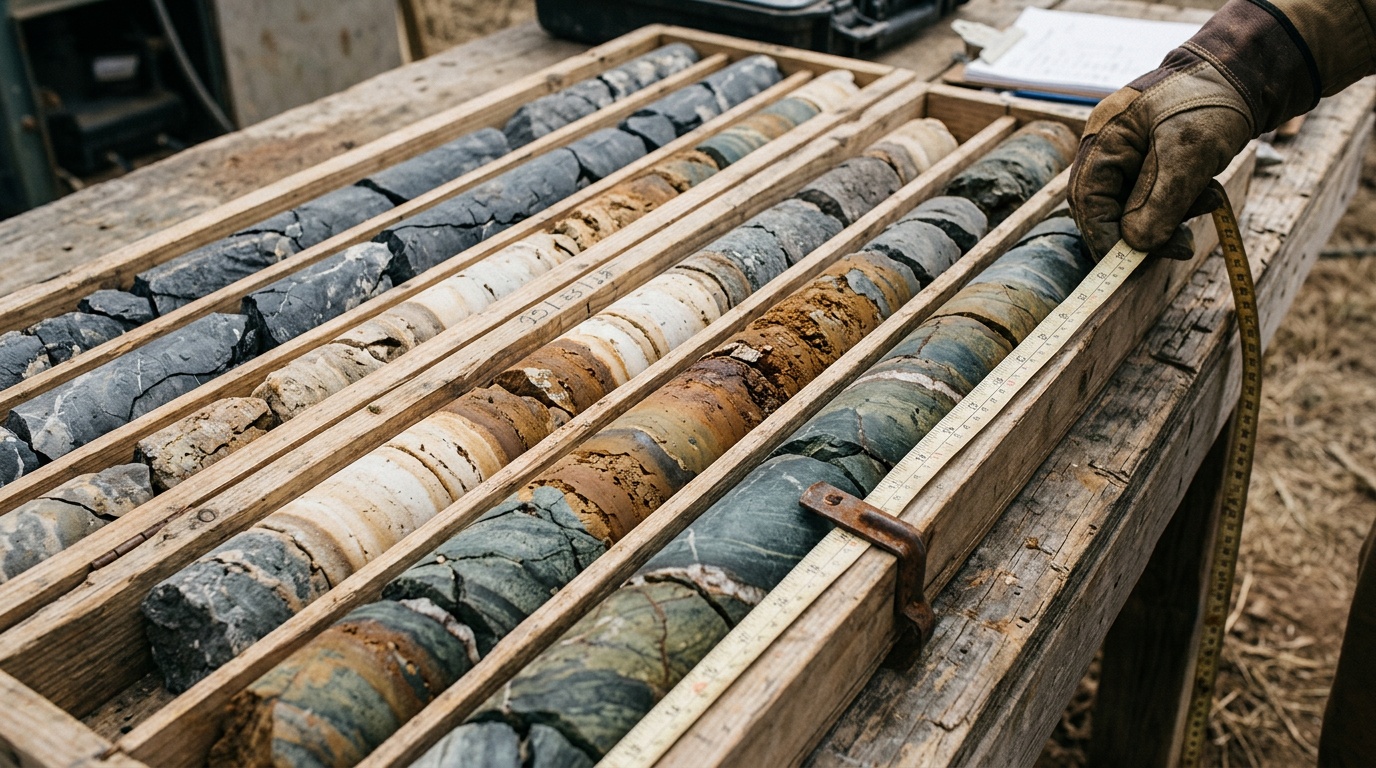
Consequence determines relevance.

AND THEN THERE’S AI.
As increasingly capable AI systems enter consequential work, the quality of the representation supplied to them becomes increasingly important.
A machine can produce an excellent answer to a question whose assumptions nobody thought to examine.
In engineering and modelling, this is understood as a foundational discipline: garbage in, garbage out. The model is only as adequate as the representation supplied to it.
A sophisticated model working from an inadequate representation does not guarantee a more adequate answer. It can produce a more confidently wrong one.
The same principle applies when increasingly capable AI systems enter consequential organisational work.
The question is not only what the system can do. It is what representation of the work, the problem, the people, the context, we are asking it to act upon.
What representation of the work are we asking increasingly capable AI systems to act upon?
WHERE THE WORK IS SHOWING UP
Consequentially complex work
Where multiple pressures, systems, people and strategic questions need to be seen together, particularly when the work crosses the boundaries through which an organisation usually understands and manages it.
Organisations navigating AI-driven change
TIHI is also working with founders, CEOs and leadership teams in small and medium-sized businesses as AI changes what is possible, how work gets done, and where the business can go next.
The question may be how to adapt, shift direction, pivot, leverage capabilities that have become newly available, redesign work, or recognise an opportunity that wasn’t visible before.
The work starts upstream of the technology choice.
What has changed?
What do we already have?
What has become newly possible?
What needs to move?
REPRESENTATION. HUMAN CONTRIBUTION. INTERVENTION.
representation → human contribution → intervention → field response → updated representation
Representation
What is happening? What are the competing explanations? What information, assumptions, relationships or consequences sit outside the current frame?
Human contribution
Whose knowledge, judgement, perspective or integrative contribution could matter, and under what conditions can it become available?
Intervention
What is understood well enough to test, and what does the response of the real system tell us next?
Construct a representation adequate enough to make a responsible intervention. Then let reality tell us what still needs updating.
The TIHI Live Lab
The TIHI Live Lab in practice
The TIHI Live Lab is a bespoke, bounded engagement around a live, consequential situation in your organisation.
It is designed to help you get further across what is happening, so you can see what matters and what becomes possible next.
The Live Lab can work at different scales.
The situation might sit with a founder or small business, a leadership team, a project, or a larger organisation. It might involve something that isn’t reconciling, an opportunity that is opening, or a business working out how to respond as AI changes what is possible.
Whatever the context, the work begins with what is actually happening and follows the consequence.
BRING US SOMETHING REAL.
Not a hypothetical. Not a tidied-up version of the situation.
Something consequential you are actually inside: a problem that keeps returning, a decision that touches more than expected, an opportunity that isn’t yet fully formed, a transition that needs a clearer picture, a situation where the effort is real but the progress isn’t matching it.
Or simply a recognition that conditions are changing and the current picture won’t be adequate for what’s coming.
The TIHI Live Lab is a bounded period of inquiry and intervention around something consequential and live. The design serves what gets brought in. Not the other way around.
It is bespoke to the situation. The inquiry follows consequence, not a predetermined structure.

The TIHI Live Lab in practice
The Live Lab can work at different scales.
The situation might sit with one person, a solopreneur, the CEO of a small or medium-sized business, a leadership team, a project, or a larger organisation.
Sometimes the situation is an organisation responding to a rapidly changing external environment, particularly as AI changes what is possible and what the organisation needs to be capable of.
What changes is who needs to be part of the inquiry, what information is available, and where the consequence is being felt. The work remains responsive to the situation rather than imposing a structure on it in advance.
For a founder, executive or small organisation
We begin with what is happening. What you are carrying. What you have tried. What isn’t reconciling, or what is opening that you can’t yet see around.
Claire works with you across the situation: what the current picture contains, what relationships exist between the things you are holding, what assumptions are operating, what belongs together that is currently being held separately.
What emerges is a more adequate picture of what you are actually dealing with, specific enough to affect what deserves movement, what needs protecting, and what does not yet need to be forced.
For a leadership team, project or organisation
We begin with what the organisation is carrying. What the leadership is seeing. What isn’t translating between what’s known and what’s moving.
Claire works across the relevant perspectives, not only the presenting frame. Who holds what. Where the knowledge is distributed. What the boundaries are between functions, disciplines and people. What is visible from inside each location and what isn’t.
Over an agreed period, TIHI works with the people, information and perspectives closest to the consequence, progressively building a more adequate representation of what is happening, identifying interventions worth testing, and learning from what happens next.
The project or situation continues while the Lab is happening.
TIHI enters through agreed touchpoints: observing, inquiring, synthesising, challenging the representation, supporting useful interventions and returning to see what the real system did with them.
The response of the real system becomes new information.
representation → human contribution → intervention → field response → updated representation
The design of the Live Lab serves the problem.
The boundary, participants, touchpoints and inquiry methods are shaped by what the consequential live situation appears to require.
You don’t need to know which boundary contains the problem before you bring it. Understanding enough of the consequence is the first work of the Lab.
CLAIRE’S ROLE IN THE LIVE LAB
Inquiry architect.
Determines what the inquiry appears to require next.
Cross-domain integrator.
Works between specialist perspectives and follows consequence across boundaries.
Representation challenger.
Interrogates assumptions, boundaries, incongruence and competing explanations.
Intervention partner.
Helps translate the developing representation into something useful enough to test.
She follows consequence across boundaries.
She doesn’t replace the specialists. She works between the representations they hold.
Facilitation may be part of that work. The expertise is in the inquiry: what becomes visible when the representations are brought into relationship.
A DEVELOPING METHODOLOGY, GROUNDED IN ESTABLISHED WORK.
TIHI’s approach develops through the Institute’s work on representation, human contribution and intervention.
It draws from established research and practice concerned with humans and organisations in complex environments. Depending on the initial inquiry, this may include ideas and techniques from naturalistic decision-making and macrocognition, sensemaking, cognitive and sociotechnical systems approaches, and research concerned with work across specialist and organisational boundaries.
The Lab does not assume every problem requires the same theoretical lens.
As the representation develops, TIHI may identify a small number of established research lenses particularly relevant to the problem, introduce selected concepts into the inquiry, and work with participants to explore what those concepts make possible to see in the live context.
The research is selected in service of the problem.
The problem is not reshaped to fit the framework.
The representation then informs interventions worth testing. The system’s response provides new information about what has been understood, what remains uncertain and where inquiry needs to move next.
THE LIVE WORK ITSELF BECOMES THE LEARNING ENVIRONMENT.
Participants encounter relevant ideas while they have a real phenomenon to think with. Concepts are introduced in service of inquiry, applied to the live work, integrated with what participants already know and tested against what happens next.
Inquire → select → introduce → apply → integrate → intervene → observe → update
Sometimes the answer really is: get the specialist.
TIHI does not assume integration replaces expertise. Sometimes deeper specialist knowledge is exactly what the work requires. The next move follows the inquiry.
Hold the AND long enough to discover what a premature OR would destroy.
What if AI could help us ask better questions?
TIHI is developing an approach we call Augmented Inquiry.
It explores how increasingly capable AI might be used to expand human inquiry, challenging assumptions, pursuing relationships between ideas, surfacing competing representations and helping humans interrogate the models through which they understand consequential problems.
The human remains responsible for judgement. For deciding what matters. For determining what evidence earns confidence. For choosing what becomes consequential enough to act upon.
The emerging question is:
What representation of the world are we asking increasingly capable machines to act upon?
Augmented Inquiry is a developing area of TIHI’s work.
NOT EVERY SITUATION NEEDS A LAB.
The TIHI Diagnostic is being developed as a structured way to examine the conditions surrounding consequential complex work and identify what may be worth investigating further.
A diagnostic should create better questions, not merely another score.
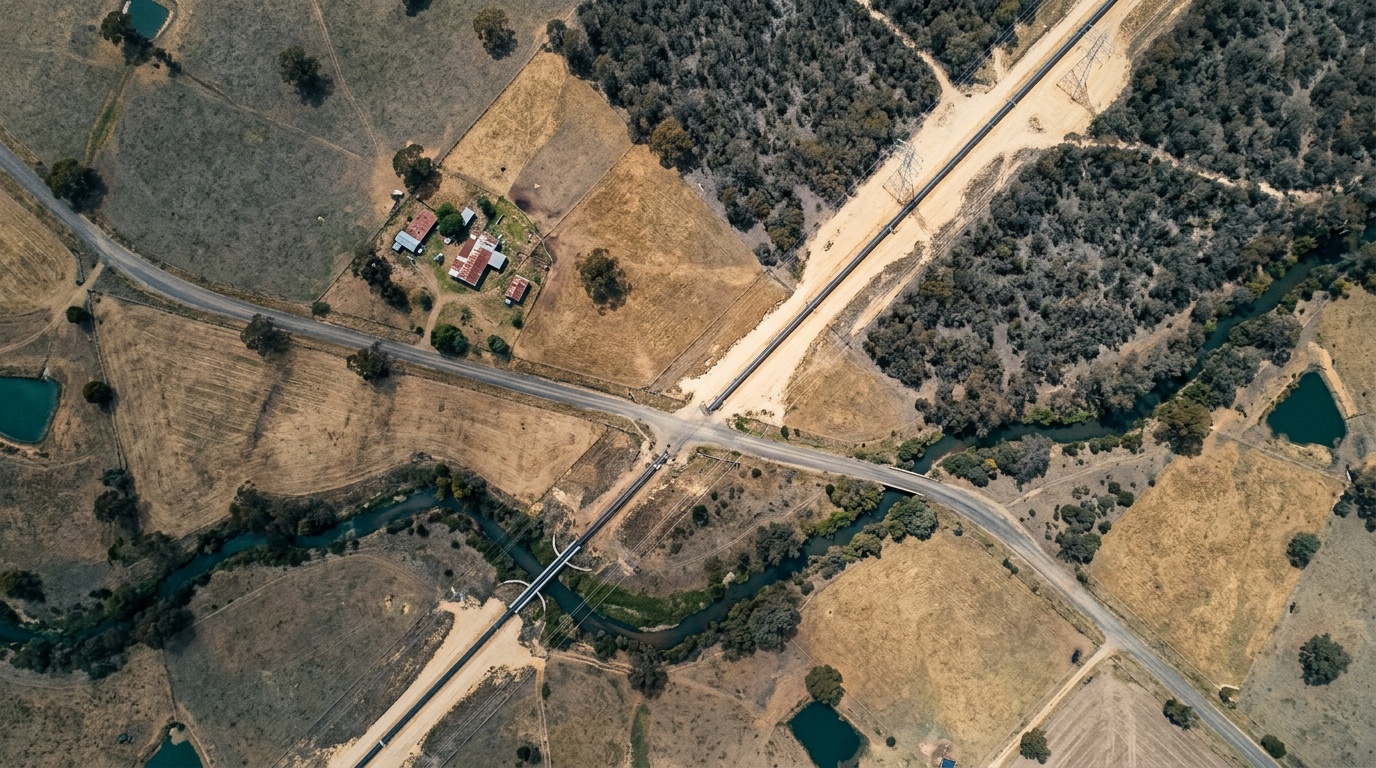
BUILT FOR WORK THAT DOESN’T RESPECT THE LINES.
TIHI’s work is particularly relevant where conditions are changing, multiple things matter at once, and the existing picture is no longer adequate to what is actually happening.
Two fields are already emerging.
Consequential complex work
TIHI’s initial field focus is Australian organisations delivering consequential large-scale projects and programmes.
Founder Claire Allison brings 25 years inside consequential complex work, including 15 years in renewables and energy transition, spanning environmental, technical, regulatory, commercial, strategic, organisational and human boundaries.
These are situations where the work rarely stays inside the boundaries through which it is formally represented. A technical decision has commercial consequences. A regulatory condition changes the project trajectory. Organisational capacity becomes a constraint on delivery. What happens on the ground changes what the strategy needs to account for.
The work requires a picture large enough to hold those relationships.
Organisations navigating AI-driven change
Alongside this, TIHI is working with founders, CEOs and leadership teams in small and medium-sized organisations facing a different kind of consequential shift.
AI is changing what is possible, what can be produced, how work can be structured, what capabilities can be leveraged, and where existing roles and assumptions may no longer hold.
For some organisations, the question is how to adapt.
For others, it is whether to shift direction, pivot, redesign how work gets done, leverage capabilities that were previously unavailable, or recognise an opportunity that didn’t exist in the same form before.
The challenge is rarely simply understanding the technology.
It is understanding what the changing conditions mean for the organisation itself.
What is changing around you?
What do you already have that has become newly valuable?
What becomes possible?
What needs to change?
What needs protecting?
And what does the organisation need to become capable of seeing before it can decide what to do next?
The common thread
The scale is different. The situations are different.
The underlying inquiry is similar.
What has changed? What matters now? What is the current representation missing? And what becomes possible when the picture becomes more adequate to the reality producing it?

BRING US SOMETHING THAT DOESN’T RECONCILE.
Or something that is opening and needs a more adequate picture before it can be pursued.
You don’t need to know what category it belongs to.
Neither do we.
Not yet.